
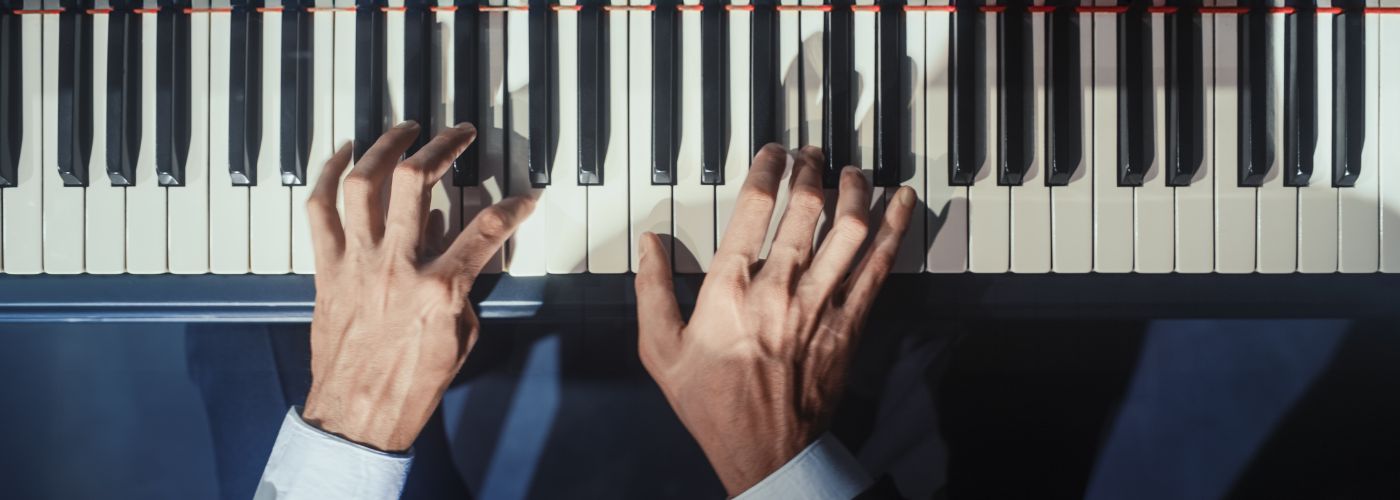
Strong, controlled fingers can make piano playing feel smoother, more accurate, and less tiring. Building strength is not about pressing the keys as hard as possible, but about developing control, independence, coordination, and endurance.
This article goes over practical ways pianists can improve their hands while developing healthier playing habits.
How To Build Better Finger Strength for Piano Playing
Developing finger strength for piano playing starts with understanding what strength means at the keyboard. Pianists do not need bulky or extremely powerful fingers.
Instead, they need fingers that can move with control while working together with the hands, wrists, and arms.
Each finger should be able to press a key clearly without creating unnecessary tension in the rest of the hand.
A good approach is to focus on slow, controlled movements before trying to play faster or louder. Pay attention to how each finger reaches the key and how the hand responds to the movement.
Good piano technique comes from controlled movement and coordination rather than using extra force to push down the keys.
When movements become easier and more natural, players can gradually increase the difficulty of their practice without sacrificing accuracy. Working with an experienced instructor through piano lessons in Las Vegas can also help students recognize technique problems and develop better playing habits.
It is also helpful to remember that the fingers do not work completely on their own. The wrist, forearm, and overall posture contribute to comfortable movement across the keyboard.
A balanced technique allows these parts of the body to support one another, which can make difficult passages easier to manage and reduce unnecessary strain during longer practice sessions.
Improve Strength With Scales and Arpeggios
Scales and arpeggios provide a practical way to develop finger strength for piano playing while also improving useful musical skills.
Unlike exercises that focus on a single finger movement, scales require the fingers, thumb, wrist, and arm to coordinate as the hand travels across the keyboard. This makes them useful for developing smoother transitions between different fingers.
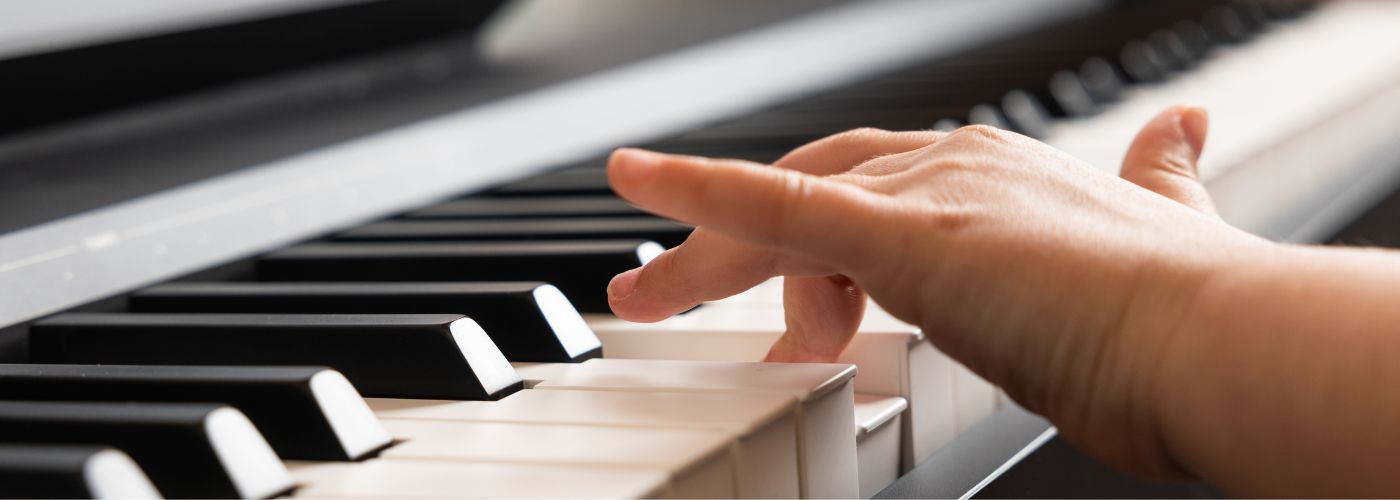
Begin scales at a comfortable tempo and concentrate on producing notes with an even volume and rhythm. Pay close attention when the thumb passes underneath the hand or when other fingers move over the thumb.
Learning more about piano scales can also help you understand how these patterns support coordination, rhythm, and overall technique.
These transitions should feel smooth instead of rushed. Practicing with a metronome can help reveal uneven notes, but speed should only increase after the movement feels comfortable.
Arpeggios require wider movements because the notes are spread farther apart. They can teach the hand to move efficiently instead of stretching and holding a fixed position.
A relaxed hand that moves across the keyboard is usually more effective than a hand that tries to stretch and reach every note from one position.
Practicing different scales and arpeggios also prepares the hands for patterns that appear frequently in classical, jazz, pop, and other styles of piano music.
Practice Finger Independence Exercises
Finger independence is the ability to move one finger without creating unwanted movement in the others. This can be challenging because the fingers naturally share muscles, tendons, and movement patterns.
Simple keyboard exercises can help improve finger strength for piano playing by teaching each finger to respond more accurately when it is needed.
One useful exercise is to place all five fingers comfortably on five nearby keys. Play one finger at a time while keeping the other fingers relaxed and lightly touching their keys.
Move slowly and listen for an even sound from every note. Avoid pressing the resting fingers into the keyboard or holding them stiffly above the keys.
The goal of an independence exercise is not to force the weaker fingers to work harder, but to teach them to move with greater control. The fourth and fifth fingers may initially feel less independent than the thumb, index, and middle fingers.
Give them time to improve instead of trying to make every finger feel identical. Short, focused exercises performed correctly are more useful than long exercises performed with a tense hand.
Maintain Proper Hand and Wrist Position
Hand position has a major effect on finger strength for piano playing because poor positioning can make simple movements require more effort. Sit at a height that allows the forearms to approach the keyboard comfortably.
The wrists should generally remain flexible and balanced instead of dropping far below the keys or staying raised in a stiff position.
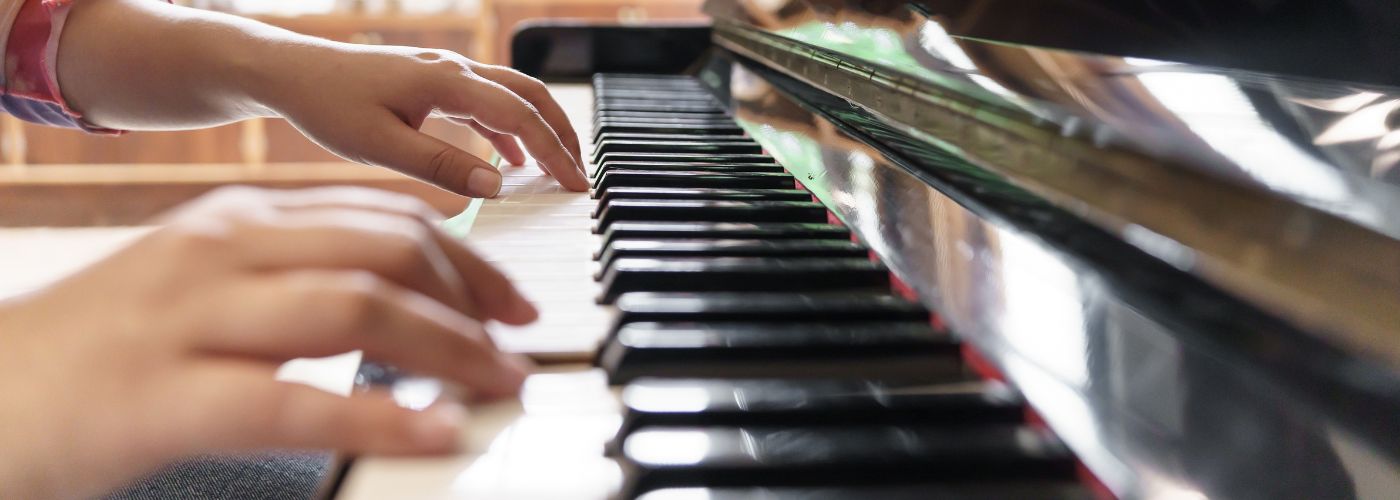
The fingers should have a natural curve rather than being forced into an exaggerated shape. Imagine the relaxed position your hand takes when it hangs comfortably at your side, and try to maintain a similar sense of ease at the keyboard.
The exact shape will change as you move through chords, scales, and wide passages, so the hand should remain adaptable rather than locked into one position.
If your wrist, hand, or forearm becomes increasingly tight while you play, adding more force is unlikely to solve the problem.
Check your posture, slow the passage down, and look for movements that may be creating unnecessary tension.
Efficient positioning gives the fingers better support and allows them to respond more freely without making the surrounding muscles work harder than necessary.
Increase Endurance Through Consistent Practice
Endurance allows pianists to maintain control throughout longer songs, lessons, rehearsals, and performances. Improving finger strength for piano playing therefore requires more than completing a difficult exercise once.
The hands need regular opportunities to practice movements accurately so that those movements gradually become more comfortable and dependable.
Consistency is usually more useful than occasional practice sessions that are extremely long. A pianist who practices regularly can divide time among technical exercises, scales, sight-reading, and musical pieces.
This variety allows the hands to encounter different movements while preventing the entire session from becoming focused on one demanding pattern.
Practice time can also be increased gradually. Someone returning to piano after a long break may need shorter sessions than an experienced player who practices every day.
Building endurance slowly gives the hands time to adapt while helping the pianist maintain good technique as practice sessions become longer.
Quality should remain the priority. If accuracy and control begin to fall apart because of fatigue, continuing to repeat the same passage may reinforce poor movements instead of improving them.
Allow Time for Rest and Recovery
Rest is an important part of developing finger strength for piano playing because the hands need opportunities to recover from repeated movements.
Pianists sometimes assume that more practice will always produce faster progress, but excessive repetition can lead to tired hands and reduced control. Breaks can help maintain concentration as well as physical comfort.
During longer sessions, step away from the keyboard periodically and allow the hands to relax naturally. You can gently move your fingers, shoulders, and arms rather than keeping them in the same playing position.
Avoid aggressive stretching or pulling on the fingers in an attempt to make them more flexible. Comfortable movement is more important than forcing the hands beyond their normal range.
Persistent pain, numbness, tingling, or unusual weakness should not be treated as a normal part of becoming a stronger pianist.
Stop or reduce the activity that is causing discomfort and consider seeking guidance from a qualified teacher or healthcare professional if symptoms continue.
Paying attention to these warning signs can help prevent a small problem from interfering with future practice.
Recovery also includes getting enough time away from demanding passages. Instead of repeating a difficult section continuously, return to it later with rested hands and fresh concentration.
Over time, a balanced routine that combines careful exercises, musical practice, good technique, and proper recovery can help pianists develop stronger control without relying on excessive force.
Learning how to optimize practice time can make it easier to balance focused exercises, musical development, and necessary breaks within each session.
Continue Reading
How to Develop Better Finger Strength for Piano Playing
Strong, controlled fingers can make piano playing feel smoother, more accurate, and less tiring. Building
Sep
Dynamic Vocal Exercises For Singers
Developing a stronger, more expressive voice takes more than simply singing songs. Regular practice with
Aug
Singing Practices To Help You Sing In Key
Singing accurately is one of the most important skills for any vocalist. Even singers with
Jul